Can provide a link hint
Hull Natural History Society

News 2025 (archived)

News > 2025

The playing fields keep giving Curlew

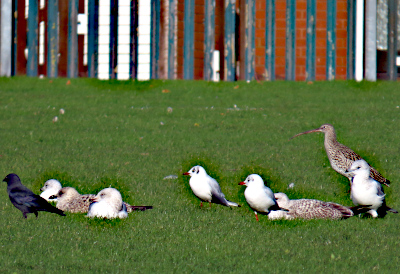
I was walking along the cycle lane at Sculcoates, and I stopped to scan the gulls. I was pleasantly surprised to spot a Curlew, standing a bit incongruously by the gulls and the ever present Jackdaw. A very nice patch addition. As I carried on, the Curlew called and I was so happy I had actually seen it, otherwise I would have not believed my ears!


Africa Gómez, 28 October 2025
Green Sandpiper in Hull Green Sandpiper

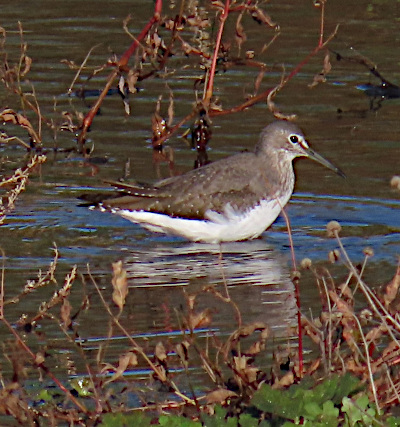
It was a bit blustery and I decided not to head to Welwick for my Holderness walk, instead, I went to Oak Road lake and followed the river Hull to the Bransholme reservoir. The reservoir completely dried up this summer, but the rains of the last couple of months mean it now has a few cm of water. I scanned the various gulls and counted the Teal and Shoveler, when I found a small wader. I initially thought it was a Common Sandpiper, but it soon became clear it was a Green Sandpiper. This wader is a migrant from the taiga in Russia and Scandinavia towards its winter quarters in the Mediterranean and Africa, although our increasingly warmer climate means some now stay during the winter in the lowlands. In East Yorkshire it can be flushed from ditches or becks, and its contrasting dark and white plumage in flight, with an obvious white rump, makes it instantly recognisable. This was my first record for Hull, so I'm glad I didn't go to Welwick.


Africa Gómez, 27 October 2025
A rare treat from above from below

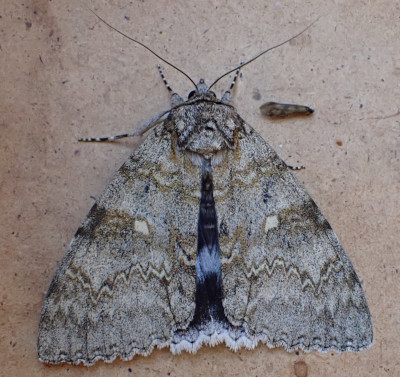
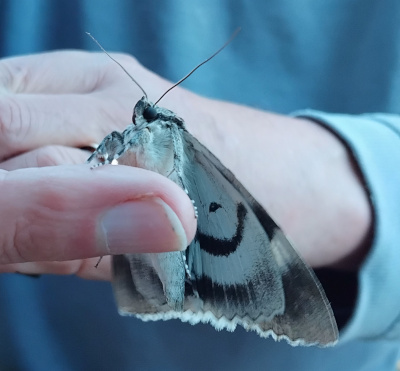
This year my home moth trap in Wawne has produced some unusual and welcome specimens. Last week provided me with a Clifden Nonpareil (Catocala fraxini), one of Britain's most beautiful and spectacular moths. Always scarce, by the 1960s it was thought to be totally absent from the country, but since then there have been sporadic arrivals of stray continental moths and, perhaps, even some re-establishment.

Often considered the Holy Grail of moth trapping, I must admit that I was totally taken aback by its size, and for a while did not recognise it in its resting state which hid the charcteristic blue of the hind-wing. The celebrated lepidopterist P B M Allan summed it up well in 1947 when he wrote that if he ever caught one he would -

"… go to Fortnum & Mason's and buy rare syrups and syllabubs for it"

I now know how he felt.


Richard Middleton, 26 August 2025
Wild Wrendale beaver-gnawed wood

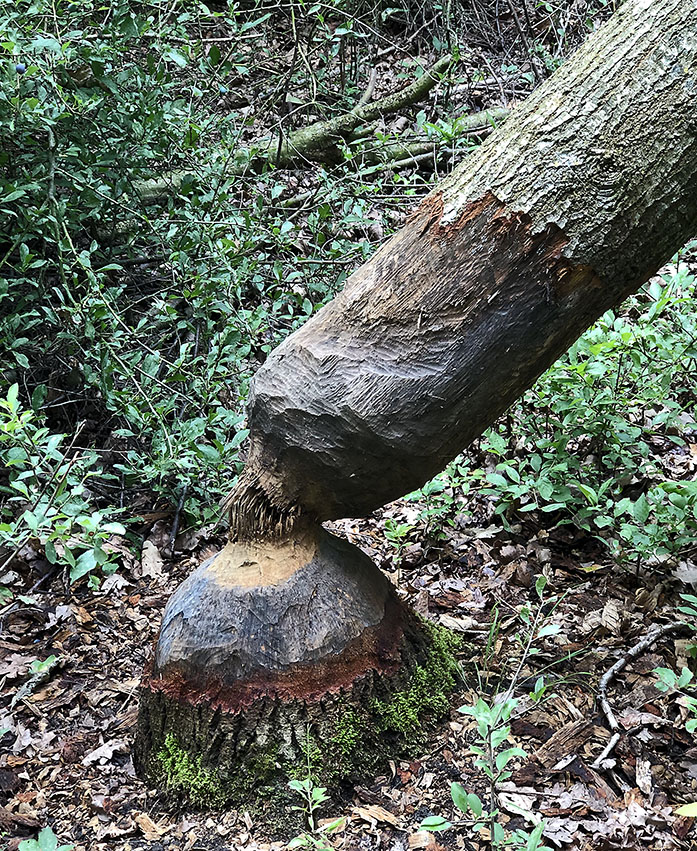
During our recent trip to Wild Wrendale, a rewilding project in North Lincolnshire, we were allowed to enter the beaver enclosure. Although we didn't meet any beavers in person, there was plenty of evidence of their activity in the area around the pond where they live. The owners showed us some trail camera footage of an adult beaver dragging a branch, followed by one of the new kits carrying a twig. In another area of the extensive site there were some very interesting ponds. Although only dug in the last few years there were lots of dragonflies and a range of aquatic plants that had established themselves, including a large area of Pillwort.


Andrew Chadwick, 28 July 2025
A new moth for Yorkshire Portland Ribbon Wave

One always hopes for something new ...

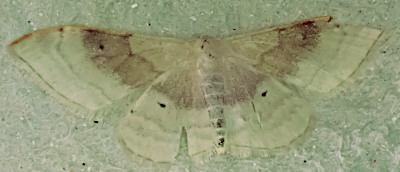
The unusual hot and windy weather of late has produced several interesting specimens in my moth trap but this has been the most exciting by far. At first I feared that it may be just a variety of Riband Wave, a very common and quite variable moth, but checking the picture with Observation.org's AI identification tool suggested Portland Ribbon Wave (Idaea degeneraria) with a 100% certainty. Looking at pictures in the book and online seemed to confirm this diagnosis. Its distribution in Britain is very restricted,with small resident populations in Dorset and the Isle of Portland and Continental migrants occasionally being found along the Channel Coast. So-far only very rare stragglers have made it much further north.

It seemed too good to be true but the photograph has now been "officially" examined, and the record accepted as a new moth for Yorkshire by Ian Marshall and Charles Fletcher, the Yorkshire moth recorders.


Richard Middleton, 18 July 2025
Moulting Bog Bush-cricket Bog Bush-cricket

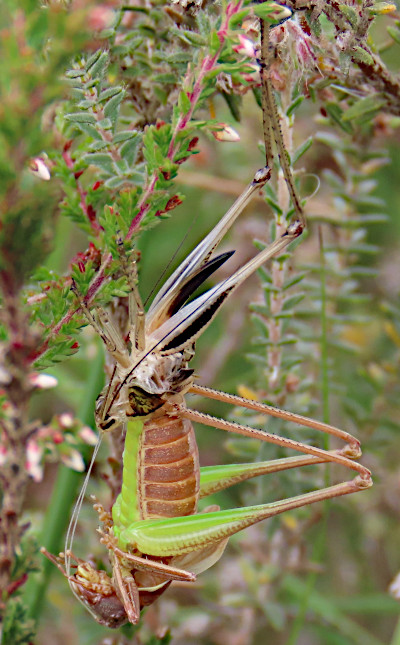
At Strensall Common, we were lucky enough to watch a Bog Bush-cricket moulting. The whole process was quire rapid, maybe less than 20 minutes. I watched the very early stage, as the individual was immobile, grasping the heath and making movements with its jaws, and as the last members attending watched the bush-cricket fully emerging, they collected the exuvia.


Africa Gómez, 17 July 2025
Agromyzid flies
 - more notable finds in Hull
Napomyza nigriorbita - Barry Warrinton

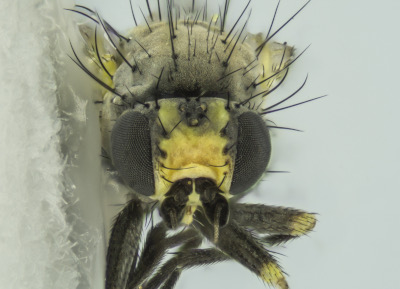
Barry Warrington, organiser of the National Agromyzidae Recording Scheme, has found another previously undescribed species of Agromyzid fly in Hull. The latest discovery was made on land near the Hull City stadium in June 2024. This tiny (wing length 2.2mm) grey and yellow fly is in the genus Napomyza and because of the dark area around both eyes is named Napomyza nigriorbita (see photo). So far Barry has only found one adult male; the larvae and the larval food plant/s are still unknown, although the larvae are expected to be stem borers, rather than leaf miners, like most other Napomyza. A detailed description of this new species (limited to males) has recently been published (Warrington 2025). Female Napomyza are trickier to identify; most Napomyza can't be reliably named unless reared from known host plants.

At the same site (July 2024), Barry also collected mines in False Fox-Sedge (Carex otrubae) and from the collected material subsequently reared adults of the Agromyzid Cerodontha angulata which is new to Yorkshire.

Reference

Warrington, B.P. 2025. Description of a new Napomyza Westwood (Diptera, Agromyzidae) species of the lateralis-group. Dipterists Digest (Second series) 32(1) 1-8.

Photo: Napomyza nigriorbita: front view of head (by Barry Warrington)


Richard Shillaker, 7 July 2025
Natural selection in action
 - the Peppered Moth
Peppered Moths

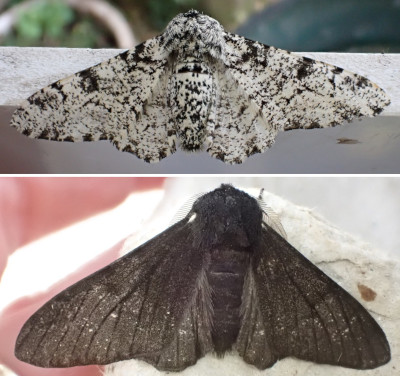
Among the contents of my Wawne moth trap yesterday morning was a pair(?) of Peppered Moths (Biston betularia) - not a particularly common moth for me. By chance one of them was the melanic (dark) form (Biston betularia f. carbonaria). This made me recall my school days, when the concept of natural selection was always illustrated with reference to this insect.

The gist of it was, that the genetic variation which produces the dark form is always present in the population but under natural conditions the dark moths suffer more bird predation than the lighter, better camouflaged kind; this disadvantage normally keeps the melanic variant rare. During the industrial revolution, trees in urban areas became soot-covered and the pale "peppered" form was much easier for birds to find and eat; the dark form then became much more common.

The Yorkshire Moths Website notes that by 1907 the dark form had almost completely taken-over in south-west Yorkshire and the rest of the county was expected to follow suit. Since the passing of the Clean Air Act 1n 1956, the form f. carbonara has declined and by 2023 only one of the 1000 moths reported in the county was melanic.


Richard Middleton, 26 June 2025
Garden songster Canary

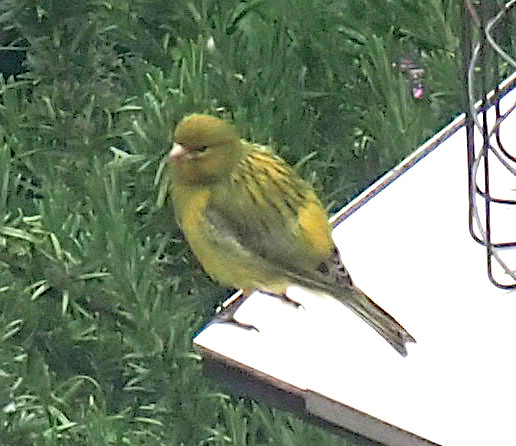
For the last week we have been treated to the song (starting at 4 am) of what was, initially, an unseen garden bird. Eventually it made an appearence on the bird table. It is clearly a Canary which has, presumably, escaped captivity. We suspect that it is an aviary bird rather than a caged pet as it seems quite relaxed and confident with the local finch and tit family groups.


Richard and Kath Middleton, 11 June 2025
Woodpeckers breeding at Pearson Park nesting woodpecker

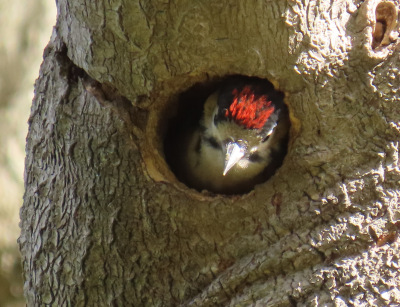
I led a walk around Pearson Park for the Friends of Pearson Park earlier in the month. The people attending were really good with their questions and ideas. One of them spotted a woodpecker entering and then leaving a nest hole. When I passed through this afternoon, the chicks were making a lot of noise and one of them was peeking out of the nest hole.


Africa Gómez, 23 May 2025
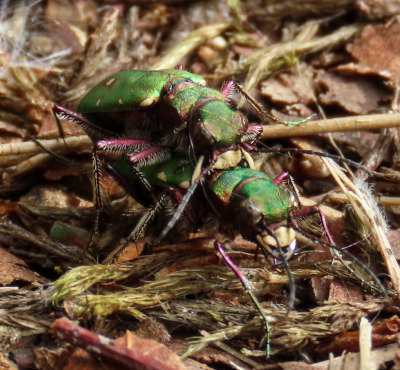
North Cliffe Wood, 6 May 2025 Treecreepers Green Tiger Beetles

The highlights of this trip for me were:

  • watching a honeybee hive installed in a dead tree. Busy workers buzzing about, some laden with pollen were coming in.
  • A cuckoo bee (Bombus rupestris), which parasitises the Red-tailed Bumblebee. Cuckoo bees have no workers, instead the females (which look very similar to the parasitised species) expel or kill the queen of a bumblebee colony and use workers to raise the next generation of males and female cuckoos. They can be told apart by the lack of pollen baskets, the very dark wings and the different pattern of hairs in the abdomen, forming clear rows.
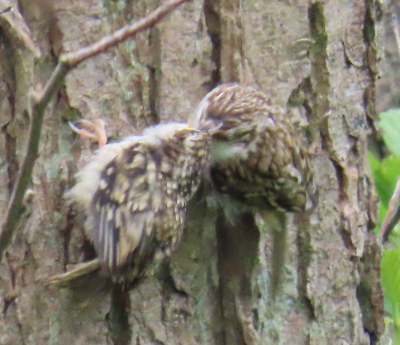
  • The third highlight was to find a Treecreeper chick clinging to a large tree trunk, being fed by two busy parents (top photo). All members had a chance to observe the chick, which looked just out of its nest.

The path by the heath had numerous Green Tiger Beetles (Cicindela campestris), a pair (lower photo), posed nicely for photos, and you can note how the male holds onto the female with his jaws.

The reserve was very dry, particularly the exposed heath, but we were please to find a large clump of Hare's-tail Cottongrass (Eriophorum vaginatum). Surprisingly the pond held water, but no dragonflies were seen.


Africa Gómez, 15 May 2025
Wawne moths Rose-eating moths

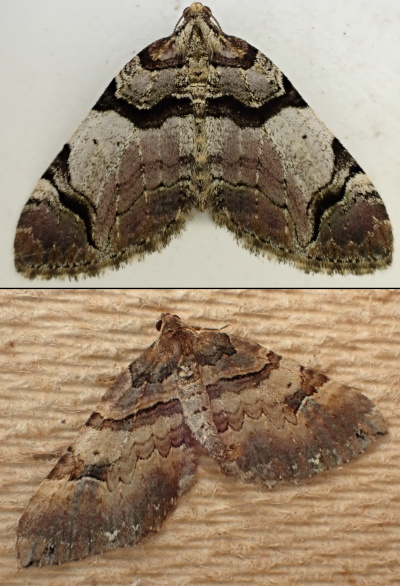
Spring is often a disappointing time for moth trapping, with low catches of rather drab specimens and a restricted species list. This year's cold nights have been somewhat similar EXCEPT, after five years, with 15562 moths of 325 species recorded, so far my meagre total of 73 moths has included two new species, both colourful and belonging to the same genus.

The top picture is of the Streamer (Anticlea derivata), one of three specimens caught so far, and the lower is the Shoulder Stripe (A. badiata). Both species feed on roses.


Richard Middleton, 6 May 2025
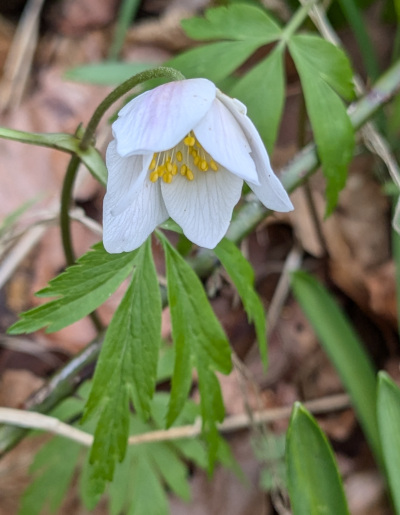
Spring arrives in Burton Bushes Wood Anemone The first Wood Anemone of the year makes its appearance in Burton Bushes.
Gabrielle Jarvis, 11 March 2025
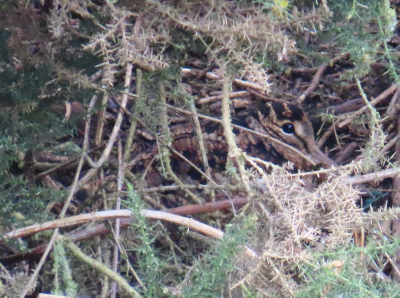
A well camouflaged Woodcock, Bempton Woodcock
Africa Gómez: 23 February 2025
BSBI New Year Plant Hunt, 2024/5
29 December to 1 January

From light-hearted challenge to citizen science project.

Every year the BSBI sets a challenge to record wild plants in open flower during a 3-hour walk, a challenge we have supported from the beginning. Individual hunts were undertaken by Lesley at Hornsea with 27 records, including a surprisingly late Bush Vetch, Yannah and Andy (who supplied the longest Hull list with 31 records and an unusual find of Japanese Quince) and myself at Sculcoates with 28 records, Jersey Cudweed being the only notable find.

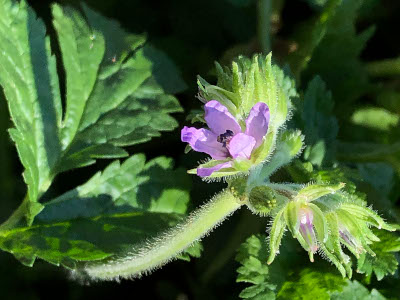
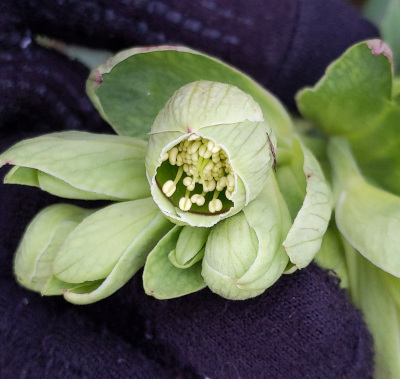
This year only one HNHS group hunt was scheduled for 29 December - a repeat of last year's unforgettable Hullnats in Hessle quest, minus the downpour! Given the recent very cold weather, including frost, the five members taking part were not expecting a large haul but we managed to clock up 58 records from the Sainsbury's area and foreshore, much the same as last year. Notable plants from around Sainsbury's were Bastard Cabbage and White Ramping-fumitory again. To the previous year's highlights at the foreshore of Musk Stork's-bill, naturalised Stinking Hellebore and Spurge-laurel (still there if you look in the right place!) was added Butcher's-broom, which had seeded itself, inaccessibly, inside a thick hedge.

When I came to download the Recording App to my computer, I noticed a shift in emphasis on the website away from light-hearted challenge to serious phenological study. All the photos, fizz and beginners' tips were confined to social media. Rules have been tightened, as one walk to one site only, previous records integrated into the project and a new recording app developed. This app can be used by those registered to send in flower records with photos direct at any time of the year, with provision for recording the stage of development of each plant. It is a massive undertaking.


Gabrielle Jarvis, 7 January 2024

BSBI New Year Plant Hunt (2) Musk Stork's-bill (AJC)

Musk Stork's-bill, Andrew Chadwick


Stinking Hellebore (HK)

Stinking Hellebore, Helen Kitson


4 January 2025