Lincolnshire weekend
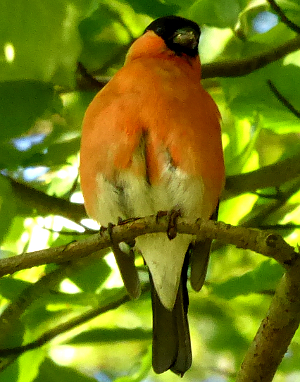
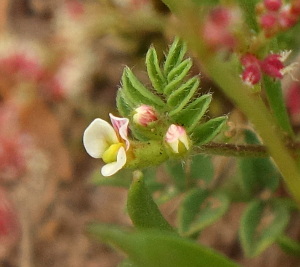
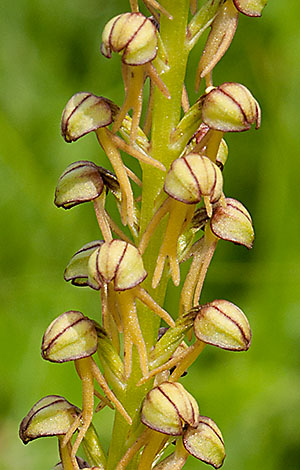
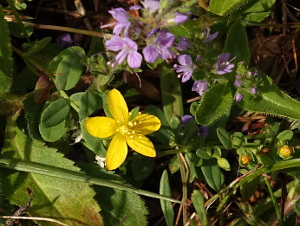
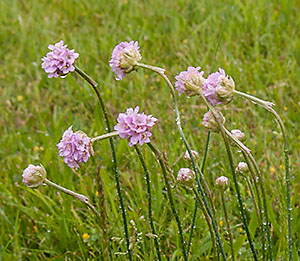
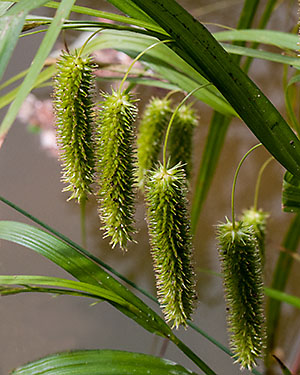
Despite heavy rain on the way down to Ancaster on the Saturday, we set off in the dry, but that soon changed. Undeterred we headed for our first stop, the cemetery where, as we hoped, we found the long-stalked subspecies of Thrift. The nearby Moor Closes reserve is an area of wet meadow and the purple of Southern Marsh-orchids amongst the Yellow Rattle and Buttercup was a fine site, appreciated even more because the rain had eased. Returning round a fishing lake, we found the handsome Cyperus Sedge and, along the main road verge, Bur Chervil, a good crop of Danish Scurvy Grass and a couple of plants of Sea Spurrey. However our next destination was the far richer roadside verges on nearby Copper Hill which are managed as a nature reserve. This is one of the few sites that support Man Orchid and we were pleased to find about ten spikes in flower, as well as plenty of the usual limestone grassland species.On the Sunday we visited Moor Farm reserve in Woodhall Spa. The main attraction is an area of heath and we spent a few hours in the sunshine discovering some very interesting species including Trailing St John’s-wort, Shepherd’s Cress, Bird’s-foot, Small Cudweed and Trailing Tormentil. Further along the trail in a wetter area there was plenty of Heath Spotted-orchid and one instance of Water Purslane. The bird life was not quite as exciting but a cuckoo did land a couple of times in the trees overhead, and was promptly mobbed by blackbirds.
Andrew Chadwick, 4 June
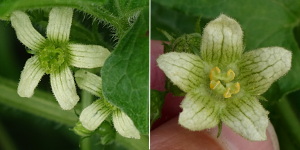 Plants of White Bryony are either male or female and bear slightly different flowers. The male flowers have five horseshoe-shaped stamens which bifurcate into 10 (right) and the female have three fuzzy styles (left). An inflated ovary can also just be seen beneath the lowest flower in the photograph.
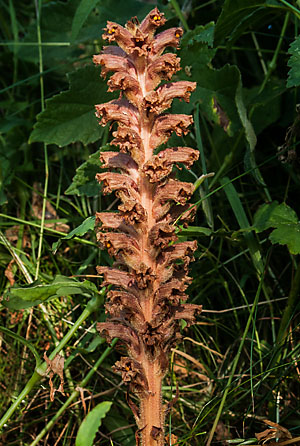
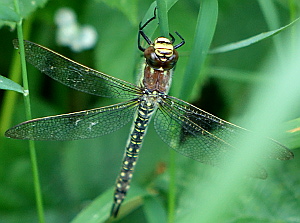
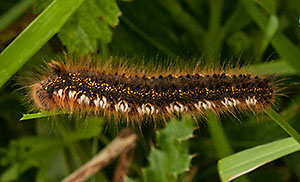
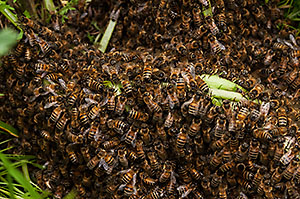 A cold and damp Tuesday evening at Kelsey Hill. A swarm of honeybees obviously thought so too, and were bedded down for the night in the corner of a field. A Drinker moth caterpillar also brightened up the visit.
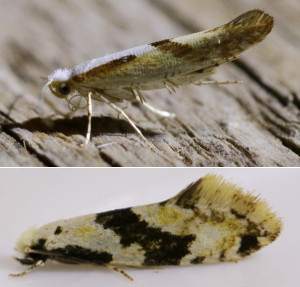 Argyresthia bonnatella and Nemapogon clematella
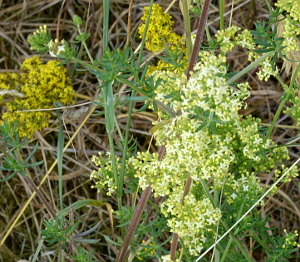 This striking hybrid between Lady's Bedstraw and Hedge Bedstraw is intermediate between its parents in almost all aspects. It has not been recorded in East Yorkshire since 1976.
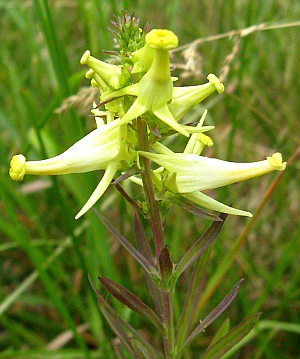 This specimen of Toadflax is exhibiting a genetic abnormality which forces radial, rather than the usual bilateral symmetry, producing flowers with five, rather than one, spurs. Thanks to John K. for drawing our attention to the plants which have survived in the same place for many years.